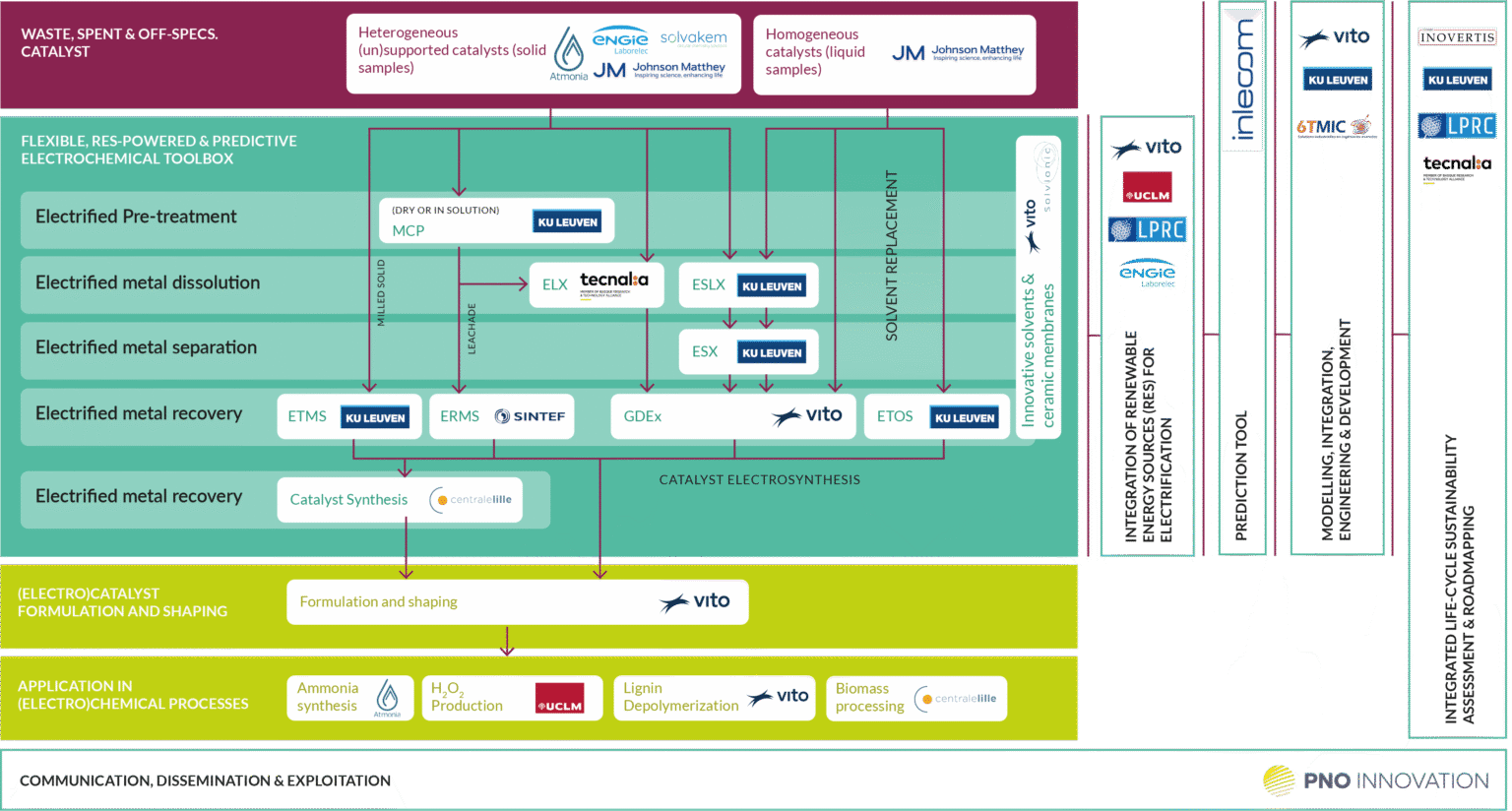
The FIREFLY project aims to support the sustainable transformation of the catalyst-based chemical industry by promoting electrification, circular use of metals, and reduced dependence on fossil energy and primary raw materials. Its main objective is to develop electro-driven technologies for recycling metals from spent and waste catalysts, integrate renewable electricity, and produce new (electro)catalysts for low-carbon chemical processes.
The key challenges addressed by FIREFLY include overcoming the environmental and economic limitations of conventional catalyst production and recycling, ensuring efficient integration of renewable energy, enabling data-driven decision-making, and demonstrating flexible, circular, and low-emission processes at pilot scale for critical chemicals such as ammonia, hydrogen peroxide, and bio-based products.
EU Grant Agreement N° 101091715.
2022-2026